

Most Americans planning a Paris trip make the same mistake. They target June or July, assume that’s the obvious time to go, and pay for it. The data from this week says otherwise.
On May 5, 2026, roundtrip fares from Los Angeles to Paris Charles de Gaulle were checked across three travel windows on Google Flights. The results weren’t subtle.
What the Numbers Actually Show
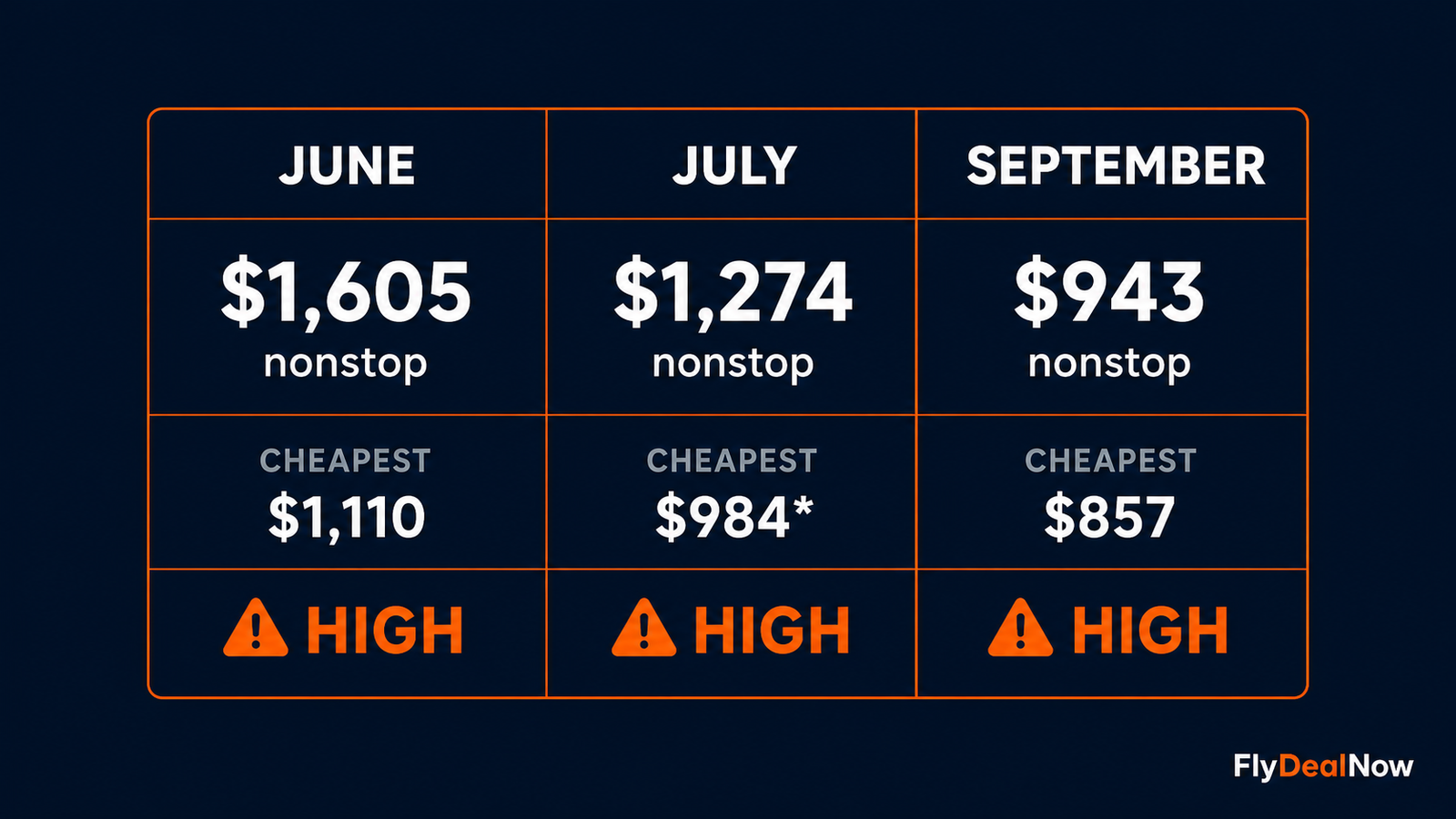
June 14–28: cheapest available fare at $1,110 roundtrip. Nonstop options on Air France and Delta opened at $1,605. The top of the nonstop range hit $1,807 on Delta/Virgin Atlantic. Google Flights flagged the period: prices are currently high.
July 12–26: cheapest fare at $984. The nonstop floor was $1,274 on Delta/Virgin Atlantic. Air France nonstop came in at $1,357. Google flagged this too: prices are currently high.
September 6–20: cheapest fare at $857. Nonstop on French Bee opened at $943. Delta nonstop sat at $1,079. Google’s signal: prices are currently high — but relative to the summer windows, September is a different market entirely.
The difference between the June nonstop floor and the September nonstop floor is $662. Between June cheapest and September cheapest: $253. That’s not a rounding error. That’s a weekend hotel stay in Paris.
Why This Happens
Paris in June and July is peak season. American travelers book it emotionally — Paris in the summer is a concept that sells itself. Airlines know this and price accordingly. Air France and Delta dominate the LAX–CDG route and have no incentive to discount during the period of highest organic demand.
July is slightly cheaper than June because late July nudges into the period when European summer demand starts to flatten. Parisian locals leave the city in August; the destination gets less crowded, not more expensive. The pricing follows.
September is what the airline industry calls shoulder season. Demand drops measurably after Labor Day. Schools are back in session in the US. Fewer families are booking. Airlines respond by dropping prices to fill seats that would otherwise go empty.
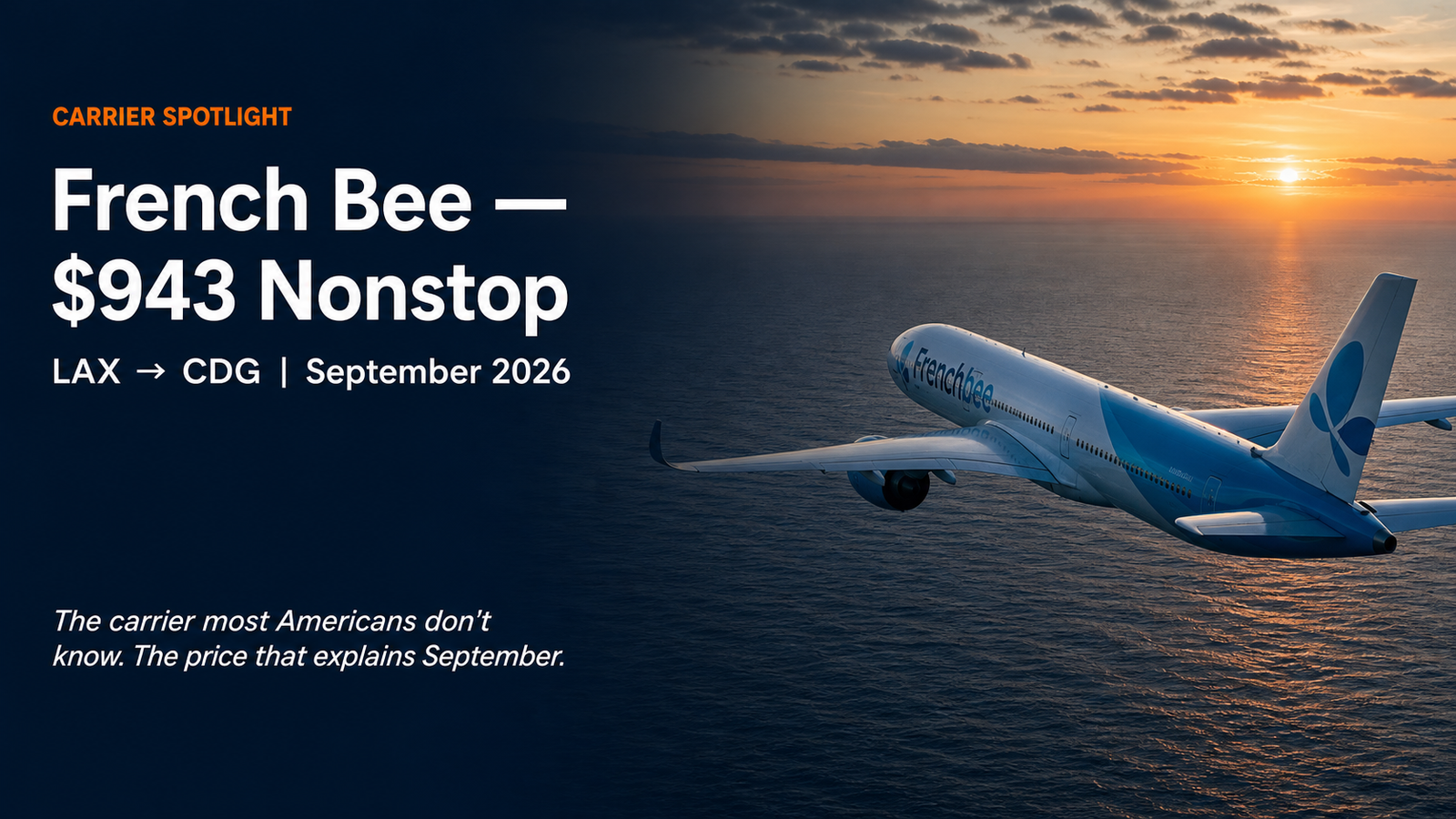
There’s also a carrier dynamic worth noting. French Bee — a French low-cost long-haul airline — appears on the September results at $943 nonstop, and is absent from the June and July top results entirely. This isn’t a coincidence. French Bee operates on thin margins and competes by targeting lower-demand windows. Their presence in September is itself a signal: this is where budget capacity goes when the premium demand has cleared.
The “Cheapest” Fare Trap
One figure needs closer scrutiny: the $984 “cheapest” fare in July.
That number comes from a Condor flight with a 1-hour-30-minute layover in Frankfurt. At first glance, it looks like a deal — $127 cheaper than the June floor. But examine the tradeoff. You’re adding a connection on an itinerary that’s already 10+ hours nonstop. A Frankfurt layover means customs exposure, potential misconnect risk, and an itinerary that can easily run 14+ hours depending on the connection window.
The nonstop in September on French Bee at $943 is cheaper than that Condor connection — and gets you there in under 11 hours. The math isn’t close.
This is the kind of comparison that Google Flights’ cheapest filter doesn’t make for you. It shows you a number. It doesn’t tell you what the number costs in actual travel experience.
Who September Actually Works For
September in Paris is not a compromise. Average daytime temperatures sit in the low-to-mid 60s Fahrenheit. Museums and monuments are significantly less crowded than in peak summer. Restaurant reservations are easier to get. The light is famously good for photography — golden hour lasts longer as the season turns.
The travelers who should reconsider September are those with school-age children locked into summer schedules, or those with a specific event anchoring them to June or July. For everyone else — couples, solo travelers, remote workers, retirees — September is the better trip at a lower price.
Total Trip Cost: The Hotel Factor
Flight savings only matter if the rest of the trip doesn’t erase them.
Paris hotel pricing follows the same seasonal logic as airfare. In June and July, demand for central Paris accommodation is near its annual peak. A mid-range hotel in the 7th or 11th arrondissement — neighborhoods popular with American visitors — can run $220–$320 per night during peak summer weeks.
September pulls those same properties down to $160–$240 per night in many cases. Over a 14-night trip, that’s an additional $420–$1,120 in savings on top of the flight difference.
Combined with the $253–$662 savings on airfare depending on your fare class, a September Paris trip can realistically come in $673–$1,782 cheaper than the same trip in June for a solo traveler. For two people, double those figures.
Booking.com currently shows solid availability across Paris neighborhoods for September, with properties ranging from budget-friendly options near République to well-rated mid-range hotels in Saint-Germain. If you’re serious about locking in the September window, accommodation should be confirmed alongside flights — the two prices are connected, and delaying hotel booking while waiting for airfare to move is a common way to lose savings on one side while gaining them on the other.
The Decision
If your travel window is fixed to June or July: the data says you’re paying a $253–$662 premium per person for the privilege of peak season. That may be worth it for your specific situation. But go in with open eyes — nonstop options are dominated by Air France and Delta at $1,274–$1,605+, and the “cheaper” alternatives involve connections that add hours to an already long flight.
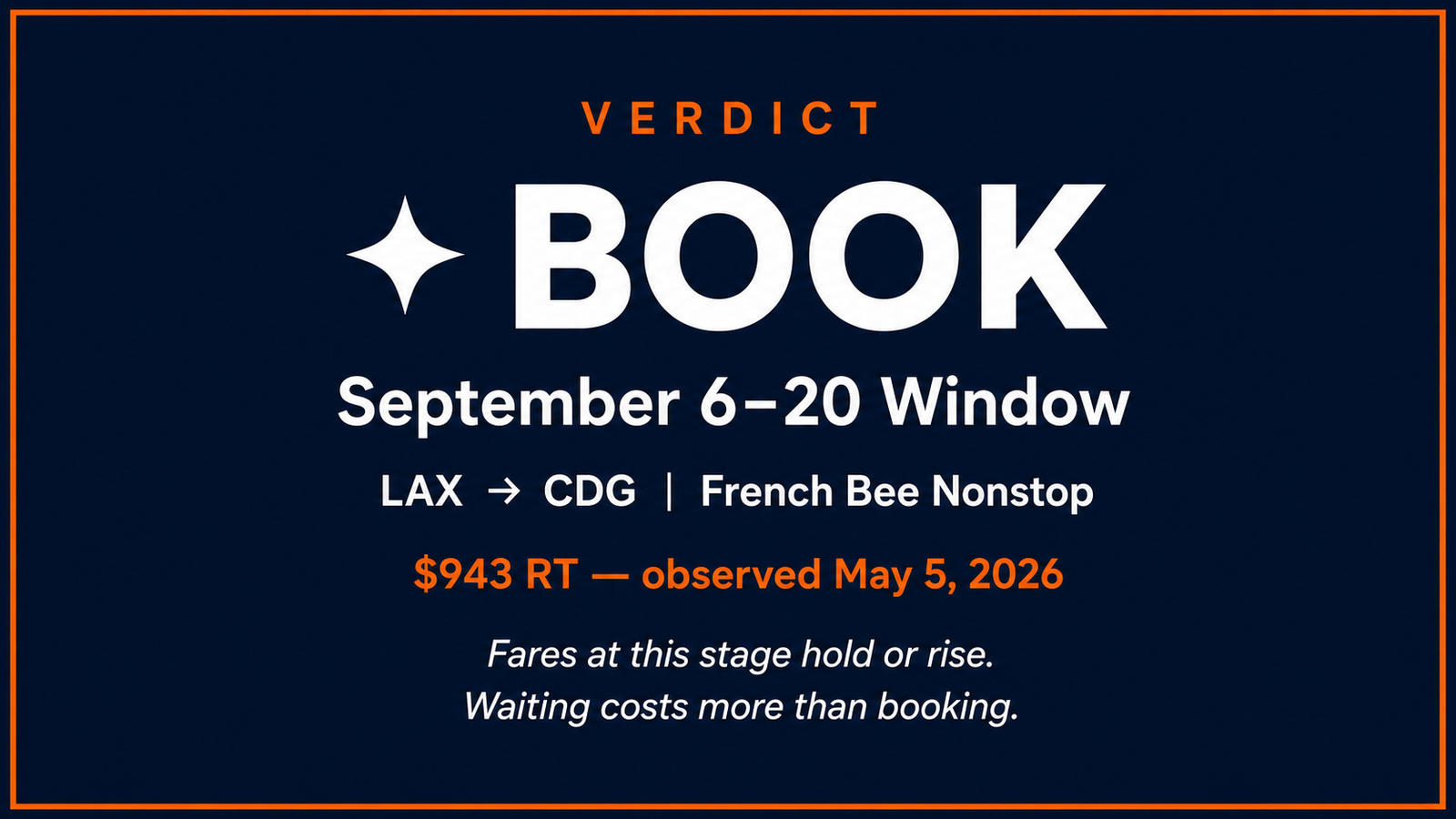
If you have flexibility: September 6–20 is the strongest window in this data set. French Bee at $943 nonstop is the standout option — it’s the lowest nonstop fare across all three periods observed, and it’s a carrier most Americans haven’t considered. Check bag fees before booking (French Bee is a low-cost operator and fees apply), but even with one checked bag added, the total often beats Air France in June by several hundred dollars.
Book or Wait? At this observation date (May 5, 2026), September fares are in a zone that historically holds or rises as the season approaches. There is no strong data signal suggesting a price drop is coming. If September works for your schedule, current fares represent reasonable entry points. Waiting for a significant drop carries more risk than reward at this stage of the booking window.
Check current French Bee fares for the September window →
Looking for more route analysis? See our breakdown of New York to Lisbon: Everyone Books Summer. The Data Says Wait and Miami to Bogotá Flights in 2026: The $122 Pricing Gap Hidden in Plain Sight.
Where to Stay in Paris Without Losing Your Savings
The Booking.com data points to a few neighborhoods worth prioritizing for value in September.
The 10th arrondissement (Canal Saint-Martin) stands out in the September results. The Canal Saint-Martin apartments listed at $2,390 for 14 nights — well-reviewed, central, and significantly below comparable properties in the 7th or 1st. This is where value-conscious travelers who still want a real Paris experience tend to land.
Near Opéra and the grands boulevards (9th arrondissement), several 3-star properties appeared in the $2,700–$3,900 range for two weeks in September. Pavillon Opéra Lafayette showed at $2,710 — the same property listed above $3,000 equivalent in June.
The budget floor in September sits around $1,391–$1,803 for 14 nights for two people, based on observed Booking.com results. These are not luxury options, but they are functional, centrally located, and leave room in the budget for the trip itself.
On Booking.com, filter by 8.0+ review score and free cancellation. Sort by top reviewed rather than price. If breakfast is included, run the math: Parisian café breakfast runs $12–$18 per person per day. A hotel charging $15 more per night with breakfast included often saves money over the stay.
Route: LAX → CDG. Data observed May 5, 2026 via Google Flights. Prices reflect economy roundtrip fares for 1 adult. Hotel pricing based on Booking.com availability for equivalent dates. All prices USD.
This article contains affiliate links. If you book through our links, we may earn a commission at no extra cost to you.
FlyDealNow Team
We help travelers pay less for flights using real pricing data — not hacks or guesswork.
✈️ Get My Personalized Flight Deal — $39or explore the Flight Pricing Blueprint — $29